



ساخت آسیاب
/Cladding Rolling Mill has emerged as a groundbreaking solution in the metal processing industry, offering a sustainable and efficient method for producing high-quality composite materials. Developed by Beijing Yang Wang Li Xin Sci&Tech Co.,Ltd. (formerly Shijiazhuang Yangwang Electromechanical Technology Co.,Ltd), this technology addresses long-standing challenges in traditional cladding processes. This article explores the technical features, advantages, applications, and company background of this innovative system. Technical Features of Cladding Rolling Mill The Cladding Rolling Mill utilizes a cold rolling process to produce metal composite strips with exceptional surface quality. Unlike conventional methods that require acid pickling, this technology eliminates surface oxides entirely, resulting in a clean, high-quality finish. The process also aligns with global energy conservation and environmental protection standards by eliminating the need for re-heating and post-rolling acid treatment. One of the key innovations is its simplified production workflow, which includes three main stages: surface preparation, bonding rolling, and annealing. This streamlined approach ensures a yield rate exceeding 90%, significantly reducing production costs and capital investment. The system's versatility allows for the creation of bimetallic or tri-metallic composites in a single production line, catering to diverse industrial needs. Key Advantages of the Technology The Cladding Rolling Mill offers several distinct advantages over traditional methods like hot roll bonding cladding and explosive cladding: Superior Surface Quality: The cold rolling process prevents oxide formation, eliminating the need for acid pickling and reducing surface defects. Environmental Sustainability: Energy consumption is minimized by avoiding re-heating, and the absence of acid treatment reduces chemical waste. High Efficiency: With a yield rate above 90%, the system maximizes material utilization and lowers operational costs. Cost-Effective Production: Reduced investment and maintenance requirements make it an attractive option for manufacturers. According to the National Institute of Standards and Technology (NIST), "Cold rolling processes can achieve higher precision and surface finish compared to hot rolling, making them ideal for applications requiring strict quality control" ( NIST Source ). This aligns with the Cladding Rolling Mill's ability to produce strips with a minimum thickness of 0.2mm and a maximum width of 1000mm. Technical Specifications Table Parameter Specification Maximum Strip Width 1000 mm Minimum Thickness 0.2 mm Material Compatibility Copper-Steel, Aluminum-Steel, Copper-Aluminum, Aluminum-Stainless Steel, Stainless Steel-Steel Yield Rate Over 90% Energy Consumption Reduced by 30-40% compared to traditional methods Applications in Diverse Industries The Cladding Rolling Mill's flexibility makes it suitable for a wide range of applications: Electronics: High-conductivity copper-aluminum composites for heat sinks and connectors. Chemical Industry: Corrosion-resistant stainless steel-steel composites for reactors and pipelines. Automotive: Lightweight aluminum-steel composites for body panels and structural components. Construction: Decorative and durable cladding materials for facades and interiors. For instance, the copper-steel cladding technology has been successfully implemented in actual production, meeting the demands of high-precision electronic components. Similarly, aluminum-steel cladding is widely used in automotive manufacturing for weight reduction without compromising strength. Company Background: Beijing Yang Wang Li Xin Sci&Tech Co.,Ltd. Beijing Yang Wang Li Xin Sci&Tech Co.,Ltd. is a leading innovator in metal composite technology, with a strong focus on R&D and sustainable manufacturing. The company has independently developed cold rolling cladding technology and complete equipment, integrating global advancements in the field. Their expertise spans multiple material combinations, including clad pipe welding and roll bonding cladding. With a commitment to environmental responsibility, the company's solutions align with international standards for energy efficiency and pollution control. Their products have been adopted in electronics, chemical processing, and automotive sectors, demonstrating the technology's versatility and reliability. Conclusion The Cladding Rolling Mill represents a significant leap forward in metal composite production, combining technical innovation, environmental sustainability, and cost efficiency. By eliminating traditional drawbacks like acid pickling and high energy consumption, this technology sets a new benchmark for the industry. As global demand for eco-friendly manufacturing grows, Beijing Yang Wang Li Xin Sci&Tech Co.,Ltd. is well-positioned to lead the transition toward smarter, greener production methods. For more information, visit the Cladding Rolling Mill Product Page or explore the company website . References National Institute of Standards and Technology (NIST) - Energy Efficiency in Metal Processing

We have successfully executed over 500
projects around the world,
many first-of-their-kind
research projects and products in China, including
We have successfully executed over 500
projects around the world,
many first-of-their-kind
research projects and products in China, including
-
2004
The 1st hydraulic AGC system for hot rolling of ribbon steel
-
2006
The 1st AFC system used for 1450mm skin pass mill
-
2009
The 1st 5-stand tandem line with 2-stand POR & Uncoiler for 650mm ribbon steel
-
2012
The 1st reversing mill for 1380mm strip
-
2016
The 1st soft-rolling system used in skin pass mill
-
2019
The 1st fully automated medium-width tandem cold rolling mill
-
2021
The 1st 5000KN Twin-stand double skin pass mill
-
2022
The 1st coupled pickling line & tandem cold mill with two modes - big roller & small roller
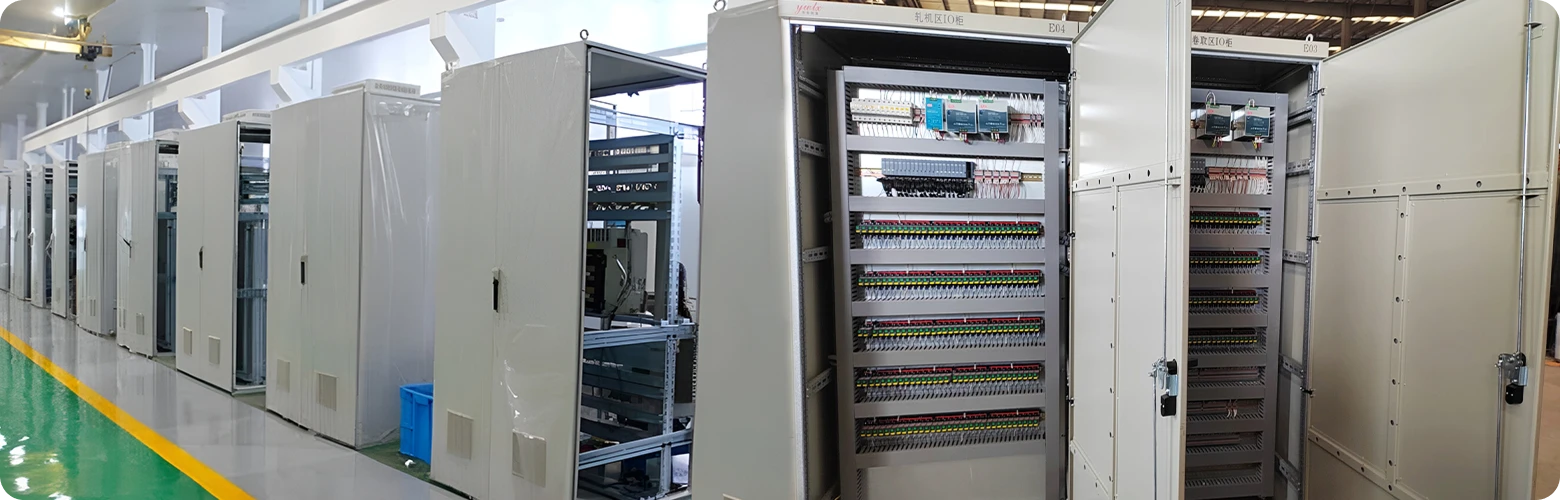
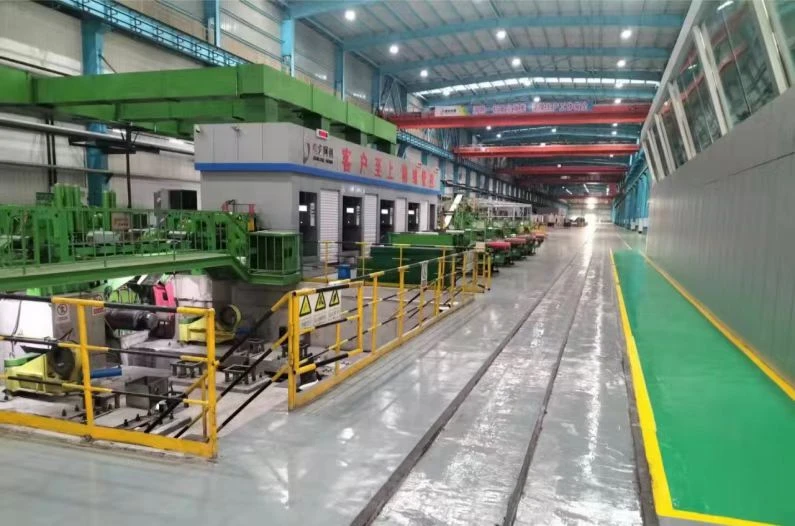
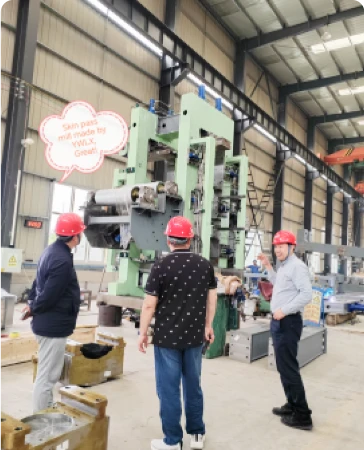

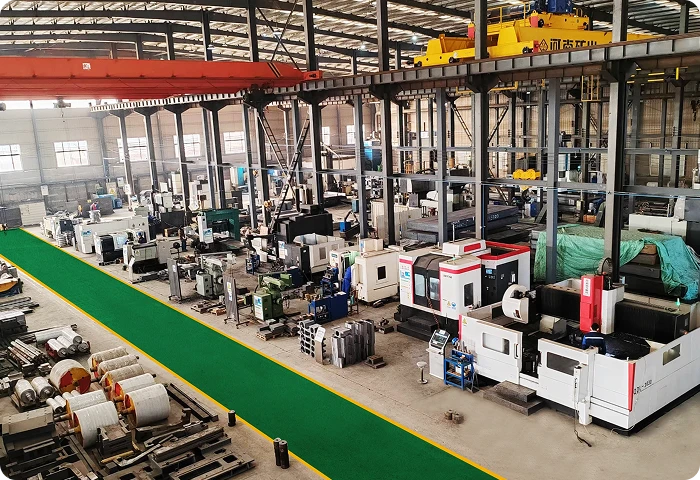
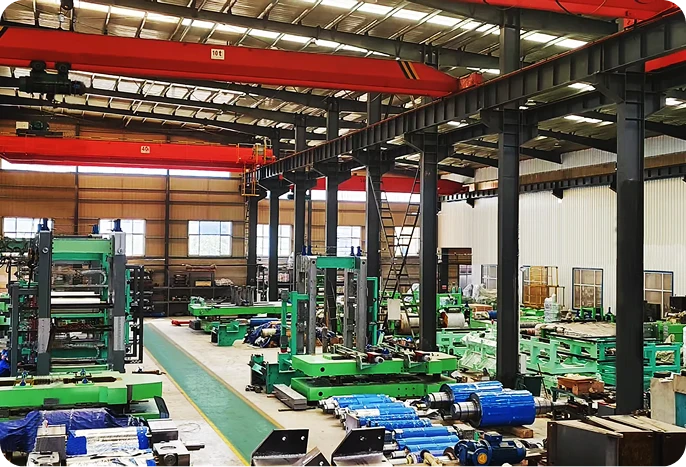
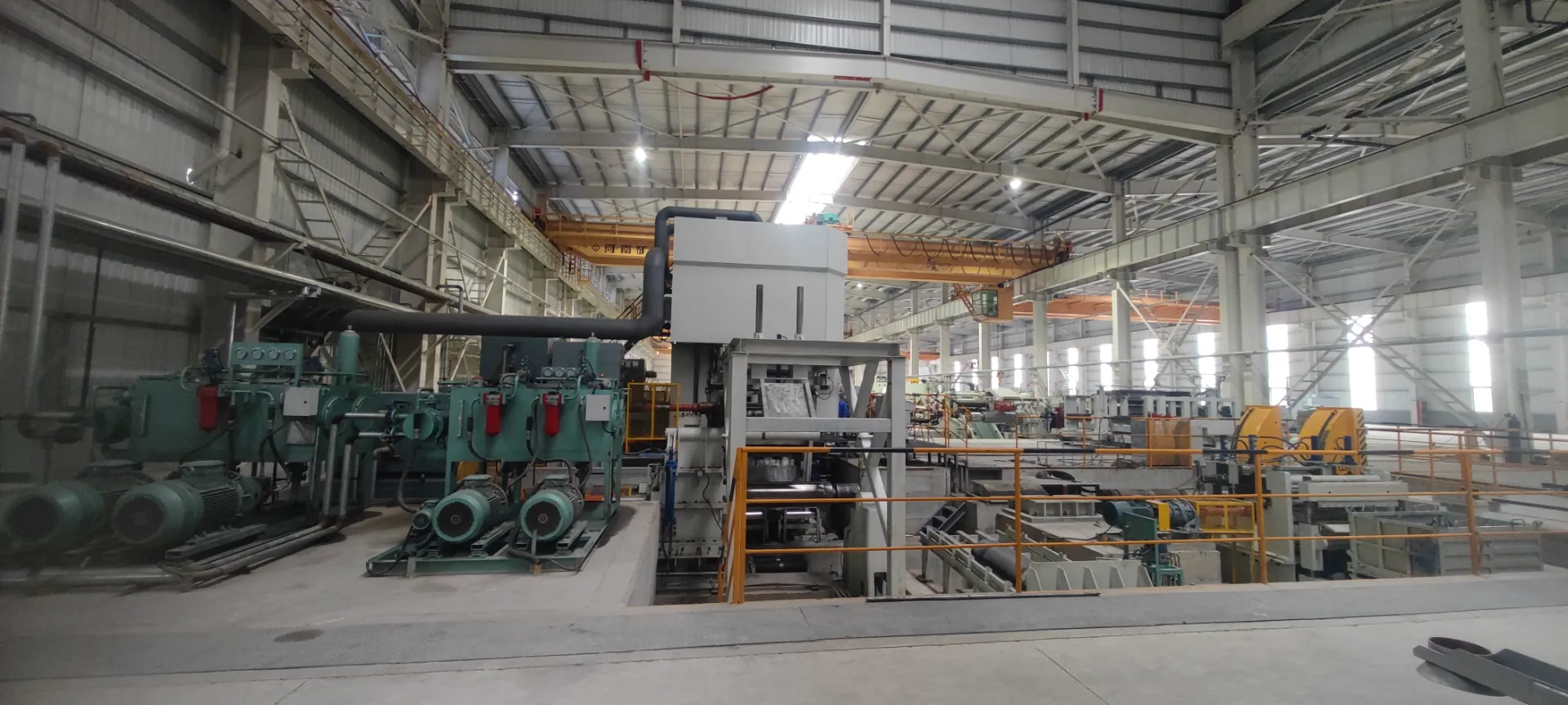
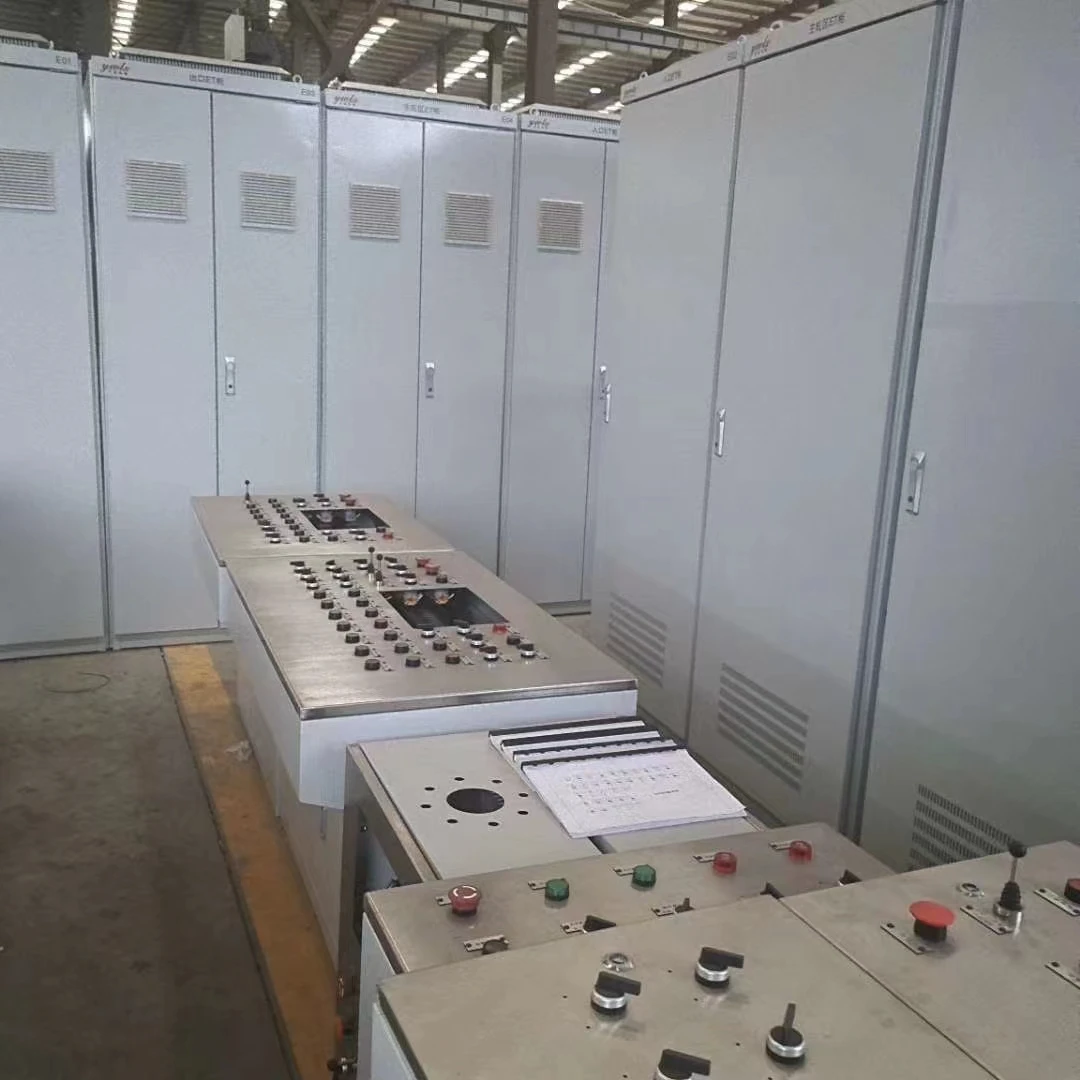
Yang Wang Li Xin operates a state-of-the-art facility over 66,000 square meters,and our manufacturing facility is fully equipped with high-tech machinery and high-capacity cranes. This enables us to handle large work pieces measuring 4.5m in width, 10m in length, and 1.5m in height, guaranteeing our capacity to produce 1800mm skin-pass mills and 1450mm rolling mills. The individual piece can weigh up to 100 tons.


Quality is fundamental to the enterprise survival. We have established a comprehensive and meticulous quality management system and have successfully obtained ISO14000 certification. Starting from the design source, it supervises the entire production cycle, including design, procurement, processing, assembly, in-factory testing, installation, and online commissioning. The workshop is equipped with measuring tools like vernier calipers, spectrometers, hardness testers, and ultrasonic flaw detectors. They are used to check materials and control tolerances to ensure the final equipment meets or exceeds requirements. All products have a unique code, This enables the easy identification and traceability of the equipment components and ensures full control of quality.


-
 Cladding Rolling Mill-Beijing Yang Wang Li Xin Sci&Tech Co.,Ltd.|Energy-Efficient Cold Rolling Cladding Technology&High-Yield Metal Composite SolutionsIntroduction The demand for high-quality metal cladding solutions has surged across industries such as electronics, automotive, chemical, and construction. Traditional methods like hot roll bonding cladding and explosive cladding have long faced challenges including low surface quality, high energy consumption, and costly production processes. However, Beijing Yang Wang Li Xin Sci&Tech Co.,Ltd. (Y
 -
 Heiß/KaltwalzproduktionslinieПресс-ножницы в прокатных станах играют ключевую роль в современном производственном процессе. Эти высокотехнологичные устройства обеспечивают точную и эффективную резку металлов, что способствует оптимизации производительности и снижению затрат на обработку. Стоит отметить, что уникальные преимущества и инновационные технологии, встроенные в прокатные станы с ножницами, делают их незаменимыми в м
 -
 Hot Rolling Mills: Unleashing Their Array of AdvantagesIn the dynamic world of metal processing, hot rolling mill s stand as essential workhorses, offering a multitude of advantages that drive the efficiency and quality of various manufacturing processes. These machines, whether in the form of hot strip mill s, hot rolling press es, or other related equipment, play a pivotal role in transforming raw metal into valuable products. High - Efficiency Prod


